
A UK Guide to Symptoms, Changes, and What to Expect
Quick Answer: What Happens During Menopause
- Menopause is when periods stop permanently as hormone levels decline.
- Oestrogen and progesterone fall, affecting the whole body – not just your reproductive system.
- Symptoms can include hot flushes, sleep disruption, mood changes, brain fog, and more.
- It is a natural life stage, not a medical condition.
- A wide range of support and treatments are available across the UK.
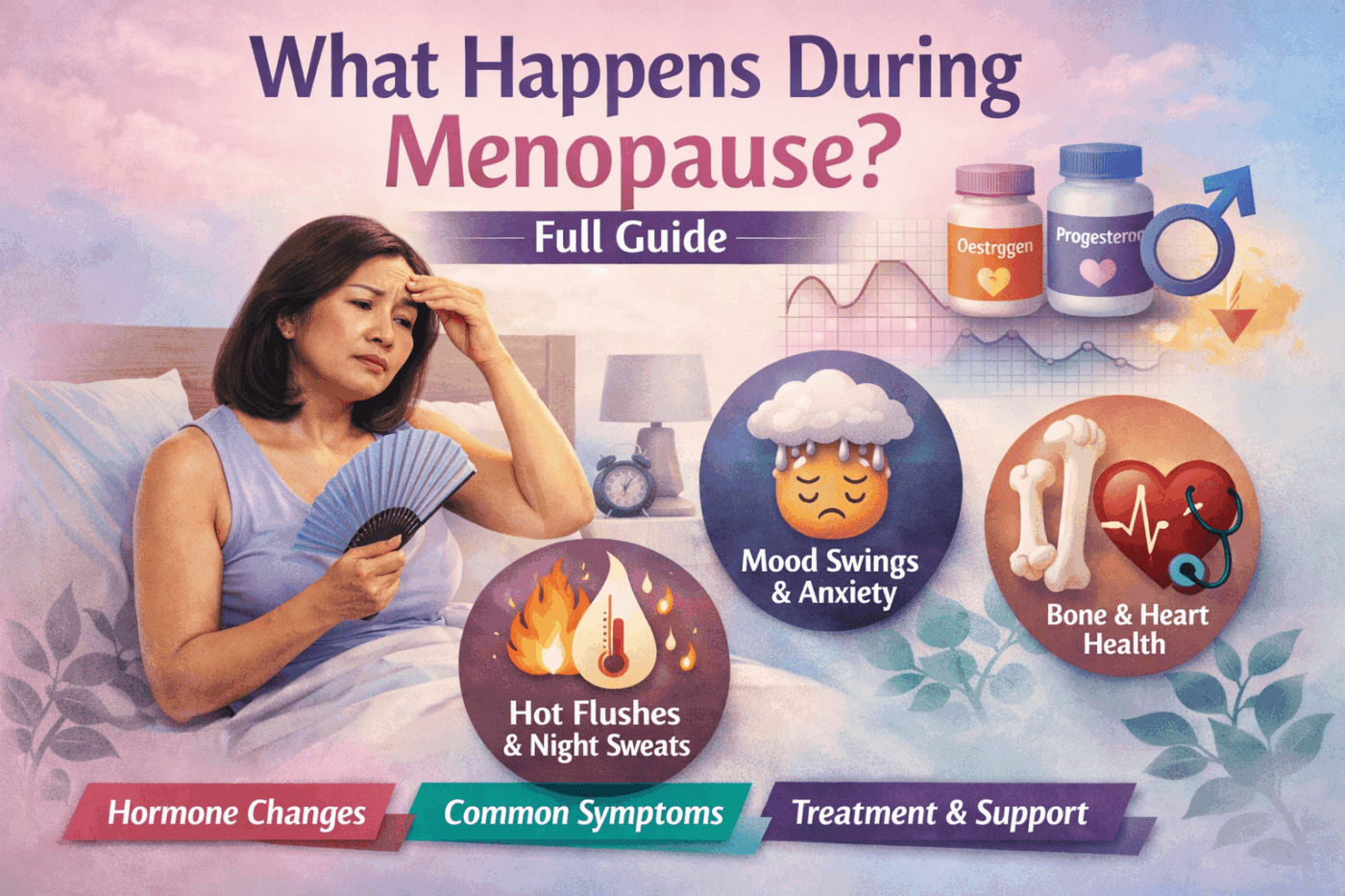
Introduction
If you have found yourself Googling ‘what is happening to my body’ at 3am, you are not alone. Menopause is one of the most significant biological transitions a woman will experience — and yet, for many, it arrives with surprisingly little information, preparation, or support.
The confusion is understandable. Menopause symptoms can begin years before periods actually stop, they vary enormously from person to person, and they touch on almost every aspect of physical and emotional health. Add in a culture that has historically treated menopause as something to be quietly endured, and it is little wonder so many women feel lost.
This guide is here to change that. Understanding what is happening, and why, is one of the most empowering things you can do. When you know what to expect, you can make informed decisions about treatment options, lifestyle adjustments, and when to seek professional support.
We will walk you through the hormonal changes, the physical symptoms, the emotional shifts, the long-term health considerations – and, crucially, what actually helps. Written for a UK audience, with UK healthcare pathways in mind.
What Is Menopause?
Menopause is officially defined as the point at which you have not had a period for 12 consecutive months. It is a single moment in time, everything before it (with symptoms already present) is perimenopause, and everything after is postmenopause.
In the UK, the average age of menopause is around 51, although it can occur anywhere between the mid-40s and mid-50s for most women. Menopause before age 45 is considered early menopause, and before 40 is known as Premature Ovarian Insufficiency (POI).
The Three Stages: Perimenopause, Menopause, and Postmenopause
| Stage | What It Means | Typical Duration |
| Perimenopause | Transition phase leading up to menopause. Periods become irregular; symptoms begin. | 2–10 years |
| Menopause | 12 months without a period. The official marker. | A single point in time |
| Postmenopause | The years following menopause. Symptoms may continue. | Lifelong |
What Happens to Your Hormones
At the heart of menopause is a significant hormonal shift. The ovaries gradually produce less of three key hormones:
- Oestrogen: The primary female sex hormone, responsible for regulating the menstrual cycle, maintaining bone density, supporting cardiovascular health, and keeping skin, vaginal tissue, and the brain functioning well. As oestrogen falls, almost every body system feels the effect.
- Progesterone: Works in partnership with oestrogen to regulate periods and support mood stability. Declining progesterone often leads to irregular cycles, sleep difficulties, and heightened anxiety.
- Testosterone: Often overlooked in women’s health discussions, testosterone plays a role in libido, energy levels, muscle mass, and cognitive sharpness. It also declines during menopause, and its loss is frequently behind symptoms like low drive and persistent fatigue.
What makes menopause symptoms feel so unpredictable is that hormone levels do not decline in a straight line. During perimenopause in particular, oestrogen can spike and crash erratically, which is why you might have a perfectly manageable week followed by several days of intense symptoms. This fluctuation, rather than the eventual low oestrogen of postmenopause, is often behind the most disruptive experiences.
What Happens to Your Body During Menopause
5.1 Physical Symptoms
Menopause symptoms UK women commonly report include a wide range of physical changes:
- Hot flushes and night sweats: Sudden waves of heat, often accompanied by sweating and a rapid heartbeat, are the most widely recognised menopause symptom. They can last from a few seconds to several minutes and vary enormously in frequency and intensity. They are caused by falling oestrogen disrupting the hypothalamus, the brain’s temperature regulator.
- Irregular or stopped periods: Changes to your menstrual cycle are usually the first sign that perimenopause has begun. Periods may become lighter, heavier, more frequent, or further apart before stopping altogether.
- Fatigue and low energy: Persistent tiredness is one of the most common but underacknowledged symptoms. It is driven by disrupted sleep, hormonal changes, and the physical demands of managing other symptoms.
- Weight gain (especially abdominal): Falling oestrogen shifts how the body stores fat, with more accumulating around the abdomen. Metabolism also slows with age, making weight management more challenging.
- Joint aches and muscle pain: Often described as feeling ‘creaky’ or stiff, particularly in the mornings. Oestrogen has an anti-inflammatory effect, so its decline can increase joint discomfort.
- Headaches or migraines: Hormonal fluctuations can trigger or worsen headaches, particularly around oestrogen dips. Women who previously had menstrual migraines may notice changes in pattern or frequency.
5.2 Sleep Changes
Sleep disruption is one of the most debilitating aspects of menopause for many women. It takes several forms:
- Difficulty falling asleep, often linked to anxiety or an overactive mind.
- Frequent waking during the night, particularly common when night sweats cause the body to overheat.
- Early morning waking, leaving you unable to get back to sleep.
The knock-on effects of poor sleep are significant: reduced ability to concentrate, low mood, increased irritability, and impaired immune function. For many women, addressing sleep is one of the first priorities in managing menopause well.
5.3 Brain and Cognitive Changes
Many women are unprepared for how profoundly menopause can affect the mind. Cognitive changes are real, common, and rooted in biology — not imagination:
- Brain fog: A vague but persistent sense of mental cloudiness – difficulty thinking clearly, finding words, or processing information quickly.
- Memory lapses: Forgetting names, losing track of conversations, or walking into a room and forgetting why. These short-term memory glitches are driven largely by oestrogen’s role in memory consolidation.
- Reduced concentration: Tasks that previously felt effortless may now require considerably more effort and focus.
These cognitive symptoms are often the ones that worry women most, particularly in the workplace. It is worth knowing that for the majority of women, they improve over time.
Emotional and Mental Health Changes
The emotional landscape of menopause is just as significant as the physical one – and it is frequently underestimated. Hormonal fluctuations directly affect the brain chemicals that regulate mood, including serotonin, dopamine, and GABA.
- Mood swings: Rapid shifts in emotional state – feeling fine one moment and tearful or frustrated the next — can be deeply unsettling. They mirror the unpredictability of hormone levels during perimenopause.
- Anxiety and panic symptoms: New or worsening anxiety is one of the most commonly reported menopause symptoms UK women discuss with their GPs. Heart palpitations, a sense of dread, or panic attacks can all be hormonally driven.
- Low mood and depression: Sustained low mood, loss of enjoyment in activities, and withdrawal from social connection may indicate depression linked to hormonal change. Women with a history of PMS or postnatal depression may be more susceptible.
- Irritability: A shorter fuse, disproportionate frustration, or a general sense of being overwhelmed is very common during perimenopause.
- Loss of confidence: Cognitive symptoms, physical changes, and the psychological adjustment of this life transition can all erode self-confidence – particularly in professional settings.
It is important to know that these are not character flaws or signs of weakness. They are physiological responses to hormonal change, and they are treatable.
Changes to Your Reproductive and Sexual Health
As oestrogen declines, the genitourinary system – including the vagina, vulva, and urinary tract, undergoes significant changes. These are grouped under the term Genitourinary Syndrome of Menopause (GSM):
- Vaginal dryness: Reduced oestrogen leads to thinner, drier vaginal tissue that produces less natural lubrication. This can cause itching, discomfort, and soreness in everyday life.
- Pain during sex (dyspareunia): Vaginal dryness and tissue thinning can make penetrative sex uncomfortable or painful. This is very common, very treatable, and absolutely worth discussing with a healthcare professional.
- Lower libido: Reduced interest in sex is driven by declining testosterone, as well as indirect factors such as fatigue, low mood, body image concerns, and relationship changes.
- Increased risk of urinary tract infections (UTIs): Thinner urethral tissue and changes to vaginal bacteria make the urinary tract more vulnerable to infection.
- Urinary symptoms: Urgency, frequency, or mild incontinence can develop as pelvic floor muscles and urethral tissue change with lower oestrogen.
Unlike hot flushes, which often improve over time, GSM symptoms tend to persist and can worsen without treatment. The good news is that local oestrogen treatments are safe, effective, and available from your GP.
Long-Term Health Changes to Be Aware Of
Beyond the immediate symptoms, menopause brings longer-term changes to health risk that are worth understanding and actively managing:
- Bone density loss: Oestrogen plays a crucial role in maintaining bone density. Its decline accelerates bone loss, significantly increasing the risk of osteoporosis and fracture – particularly of the hip and spine. Strength training, calcium, vitamin D, and HRT can all help protect bones.
- Cardiovascular risk: Before menopause, oestrogen offers some protection to the heart and blood vessels. After menopause, the risk of heart disease increases. Maintaining a healthy weight, exercising regularly, and managing blood pressure and cholesterol become especially important.
- Cholesterol changes: Oestrogen helps regulate LDL (bad) cholesterol and raise HDL (good) cholesterol. Falling oestrogen can shift this balance unfavourably, increasing cardiovascular risk further.
- Skin, hair, and nails: Reduced oestrogen leads to less collagen production, resulting in skin that becomes drier, thinner, and less elastic. Hair may thin or shed more noticeably, and nails can become more brittle.
How Long Do These Changes Last?
One of the most common questions women have is: how long will this go on for? The honest answer is that it varies — sometimes significantly.
- Perimenopause can last anywhere from two to twelve years, with an average of around four to eight years.
- Symptoms may continue into postmenopause, sometimes for several years after periods have stopped.
- Hot flushes, on average, last around seven years – but for some women, they continue for longer.
- Symptoms like vaginal dryness tend to persist indefinitely without treatment.
- Cognitive symptoms and mood changes generally improve as hormones stabilise.
The most important thing to remember is that every woman’s experience is different. Some will breeze through with minimal disruption; others will find it significantly impacts daily life. Both are valid — and support is available for all.
What Helps During Menopause
10.1 Medical Treatments (UK)
- Hormone Replacement Therapy (HRT): The most effective treatment for menopause symptoms. Modern HRT is body-identical and considered safe for the majority of women. It works by replacing the oestrogen and progesterone the body is no longer producing. Available on the NHS, and now with greater prescribing flexibility following updated NICE guidelines.
- Vaginal oestrogen: A low-dose, localised treatment for GSM symptoms (dryness, discomfort, UTIs). Considered safe for almost all women, including those who cannot use systemic HRT. Available as a cream, pessary, or ring.
- Non-hormonal medications: For women who cannot use HRT, options include certain antidepressants (such as SSRIs) for mood and hot flushes, gabapentin for hot flushes, and clonidine. These are prescribed on an individual basis by your GP.
10.2 Lifestyle Support
- Nutrition: A diet rich in protein helps maintain muscle mass; calcium and vitamin D support bone health; phytoestrogen-rich foods (such as soy, flaxseed, and pulses) may offer mild symptom relief for some women. Reducing alcohol and caffeine can help with hot flushes and sleep.
- Exercise: A combination of strength training (to preserve bone and muscle mass) and cardiovascular exercise (to support heart health and mood) is one of the most consistently effective lifestyle interventions for menopause. Aim for a minimum of 150 minutes of moderate activity per week.
- Sleep hygiene: Keeping a consistent sleep schedule, keeping the bedroom cool, avoiding screens before bed, and managing night sweats with breathable bedding can all make a meaningful difference to sleep quality.
- Stress management: Chronic stress raises cortisol, which can worsen menopause symptoms. Prioritising stress reduction – whether through exercise, therapy, social connection, or rest — is not a luxury but a health priority.
10.3 Alternative and Holistic Support
- CBT for menopause: Cognitive Behavioural Therapy has a strong evidence base for reducing the distress caused by hot flushes, improving sleep, and managing anxiety during menopause. It is recommended in NICE guidelines and is increasingly available via NHS or private referral.
- Supplements: Some women find relief from magnesium (sleep and anxiety), omega-3s (mood), or herbal supplements such as red clover or black cohosh. Always discuss supplements with a healthcare professional, particularly if taking medication.
- Acupuncture and mindfulness: Both have supporting evidence for symptom management, particularly for hot flushes, sleep, and mood. They are best considered as complementary approaches alongside — rather than replacements for — conventional care.
When to Speak to a GP
You do not need to wait until things are unbearable. If menopause symptoms are affecting your daily life, your relationships, or your work, that is reason enough to seek support. Specifically, do speak to your GP if:
- Your symptoms are significantly affecting your quality of life, sleep, or mental health.
- You are experiencing menopause symptoms before the age of 45 — this warrants proper investigation.
- You are under 40 and have stopped having periods – this is classed as Premature Ovarian Insufficiency and requires prompt medical review.
- You have unexpected or unexplained vaginal bleeding after menopause.
- You have sudden or severe symptoms that feel unusual or alarming.
- You want to discuss HRT or other treatment options.
Common Myths About Menopause – Debunked
❌ Myth: ‘Menopause is just hot flushes’
✅ Reality: Hot flushes are the most recognised symptom, but menopause affects sleep, cognition, mood, sexual health, bone density, cardiovascular risk, and more. Many women experience little in the way of hot flushes and yet have significant symptoms in other areas.
❌ Myth: ‘You just have to suffer through it’
✅ Reality: You absolutely do not. Effective treatments, from HRT to lifestyle changes to targeted therapies, can dramatically improve quality of life. No one should feel they have to endure menopause in silence.
❌ Myth: ‘HRT is unsafe for everyone’
✅ Reality: The evidence base on HRT has advanced significantly in recent years. For most women, modern body-identical HRT is safe, effective, and beneficial. Individual risk assessment matters — but blanket fear of HRT is outdated and unhelpful.
❌ Myth: ‘Menopause only lasts a year’
✅ Reality: The 12-month milestone without a period is what defines menopause — but the transition (perimenopause) can last up to a decade, and symptoms may continue for years into postmenopause.
❌ Myth: ‘It only affects older women’
✅ Reality: Perimenopause can begin in the early 40s, and early menopause affects a meaningful percentage of women. Age does not disqualify anyone from experiencing – or seeking support for – menopause symptoms.
You Are Not Alone: Menopause Support Across the UK
Menopause can feel isolating – particularly when you are trying to manage symptoms at work, hold your relationships together, and simply get through the day. But a growing network of support exists, and you deserve to access it.
🌱 Find Menopause Support Near You at The Menopause Directory
The Menopause Directory is a free UK directory of menopause specialists and wellbeing practitioners – helping you find the right support, wherever you are.
The directory includes:
- 🏥 Menopause clinics and specialists – both NHS and private
- 🥑 Nutritionists and dietitians experienced in menopause
- 🏋️ Fitness professionals specialising in perimenopausal women
- 💬 Therapists, counsellors, and CBT practitioners
- 💼 Workplace menopause support and coaching
- 🌿 Holistic and complementary health practitioners
Browse the directory at The Menopause Directory – because finding the right support should be simple.
Final Thoughts
What is happening to your body is real. The symptoms are real. The impact on your life is real. And it is valid – all of it.
Menopause is not a failure of your body. It is a profound biological transition – one that carries challenges, yes, but also the potential for a deeper understanding of your own health and needs. Women who seek support early consistently report better outcomes: improved symptom management, better sleep, more stable moods, and a stronger sense of agency over their health.
Understanding what is happening is the first step. From there, you can make informed choices – about treatment, about lifestyle, about who you want in your corner.
The next chapter is yours to shape. You do not have to navigate it alone.
Frequently Asked Questions
What are the first signs of menopause?
The earliest signs of menopause typically appear during perimenopause and include changes to your menstrual cycle (periods becoming irregular, heavier, lighter, or less predictable), sleep disruption, mood changes such as increased anxiety or irritability, and brain fog. Hot flushes and night sweats may also begin before periods stop entirely.
How do I know if I am menopausal?
In women over 45, menopause is usually diagnosed clinically – based on symptoms and the absence of periods for 12 months. Blood tests to measure FSH (follicle-stimulating hormone) levels are not routinely recommended for this age group as hormone levels fluctuate significantly during perimenopause. If you are under 45 and experiencing symptoms, your GP may use blood tests alongside a clinical assessment.
What is the average age of menopause in the UK?
The average age of menopause in the UK is around 51. Most women experience menopause between the ages of 45 and 55. Menopause before 45 is considered early, and before 40 is classed as Premature Ovarian Insufficiency (POI), which requires prompt medical review.
Can menopause symptoms be treated?
Yes. There are several effective treatment options available in the UK. Hormone Replacement Therapy (HRT) is the most effective treatment for most symptoms and is recommended in current NICE guidelines for suitable women. Local vaginal oestrogen is highly effective for genitourinary symptoms. Non-hormonal medications, CBT, and lifestyle changes also have good evidence behind them. There is no single approach that works for everyone, which is why a conversation with a knowledgeable GP or menopause specialist is so valuable.
How long does menopause last?
Menopause itself is a single moment, the 12-month point without a period. But the broader transition, including perimenopause, can last between two and twelve years. Some symptoms (particularly hot flushes) typically improve within seven years of menopause; others, such as vaginal dryness and urinary symptoms, may persist without treatment. Everyone’s experience is different.
This content is for informational purposes only and does not constitute medical advice. Please consult a qualified healthcare professional for personalised guidance.
Related menopause guides
- Perimenopause vs Menopause:
- Early Perimenopause at 40: What’s Happening to Your Body, and What You Can Do About It
- Does Menopause Ever End?
- Browse menopause services in The Menopause Directory

Author: The Menopause Directory
About this guide
This guide is published by The Menopause Directory editorial team to help UK readers understand menopause symptoms, support options and services. It is for general information only and should not replace advice from a GP, pharmacist or qualified menopause specialist.
Last reviewed by The Menopause Directory editorial team.