
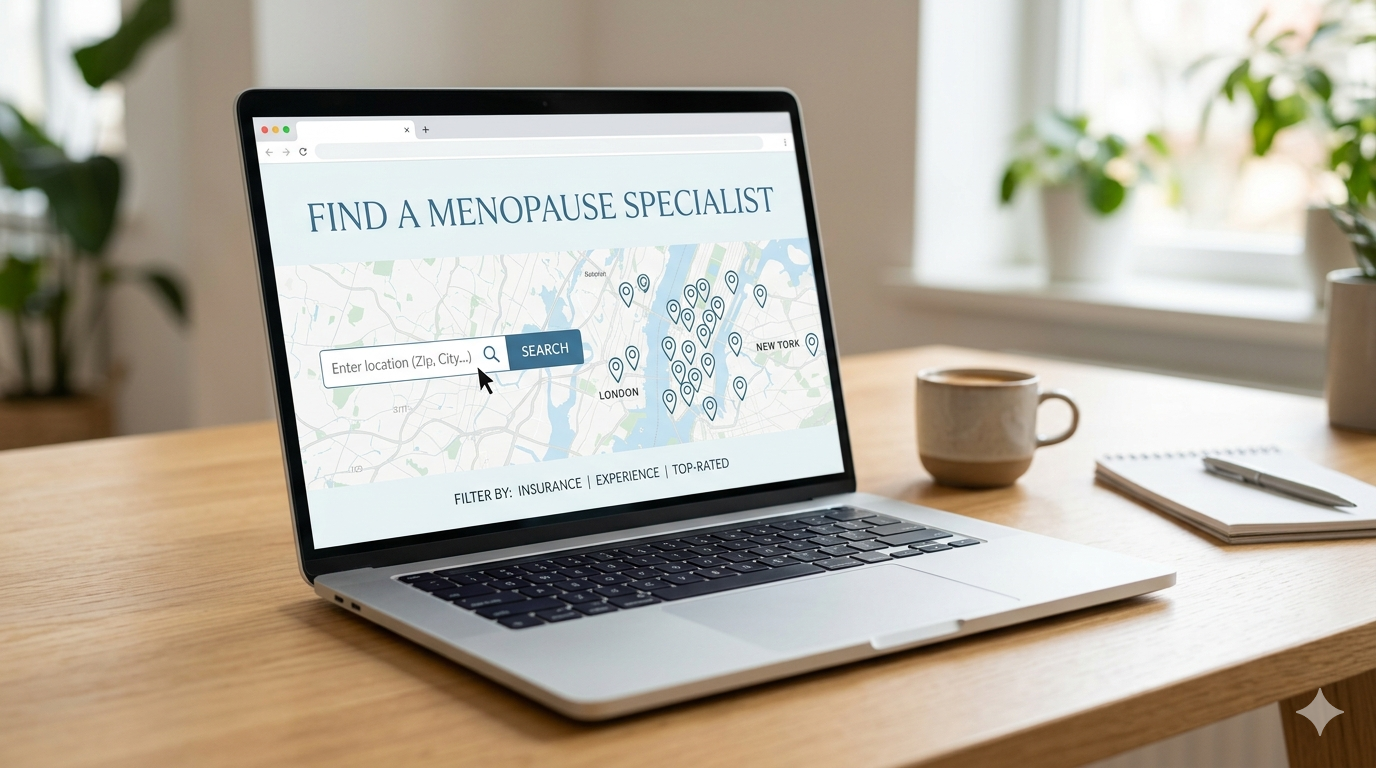
If you are searching for a menopause specialist near me, you are not alone. Millions of women in the UK are currently navigating perimenopause or menopause with symptoms that significantly affect their daily lives, yet many wait months or even years before finding a specialist who genuinely helps.
This guide explains exactly how to find a menopause specialist in the UK, whether through the NHS or privately, what qualifications to look for, what to expect at your appointment, and how to get seen as quickly as possible.
If you are ready to compare options now, you can also search menopause specialists, clinics and support services in The Menopause Directory.
What is a menopause specialist?
A menopause specialist is a healthcare professional with advanced, dedicated training in perimenopause, menopause, and post menopause care. This might be a GP with a special interest in menopause, a gynaecologist, an endocrinologist, or a nurse practitioner who has completed formal menopause training recognised by the British Menopause Society.
The key difference between a menopause specialist and a standard GP is depth of knowledge and time. A menopause specialist appointment is typically 45 to 60 minutes long. It focuses entirely on your hormonal health, covers the full range of treatment options, and is informed by the latest clinical evidence and NICE menopause guidance. A standard GP appointment is usually much shorter and has to cover a wider range of health concerns.
This does not mean your GP cannot help with menopause. Many GPs provide excellent menopause care. But when symptoms are complex, when treatments are not working, or when you simply want a clinician whose expertise is focused on this stage of life, a menopause specialist may be the right choice.
Step one: start with your GP
For most women, the journey to a menopause specialist begins with their GP. This is worth doing even if you intend to go private, because your GP can provide a full medical history review, arrange relevant blood tests where appropriate, prescribe initial treatments, and refer you to an NHS specialist if needed.
Under NICE guidance, your GP should be willing to discuss menopause symptoms with you, consider HRT as a treatment option where appropriate, and refer you onwards if your needs are complex. If your GP is not providing this level of support, you can ask to see a different GP at your practice, request a longer appointment, or ask specifically for a referral to a menopause specialist.
Come to your appointment prepared. Write down all your symptoms, when they started, how they affect your daily life, and any questions you want answered. The more specific you can be, the more productive the appointment will be.
How to get an NHS menopause specialist referral
NHS menopause specialists are usually based in hospital outpatient departments, often within gynaecology or endocrinology services. Access is normally via GP referral.
You are more likely to receive an NHS referral if your symptoms are severe or complex, if first-line treatments have not worked, or if you have a relevant medical history such as premature ovarian insufficiency, surgical menopause, a history of breast cancer, or significant cardiovascular risk factors.
When asking for a referral, be clear and specific about how your symptoms are affecting your life. Mention any treatments you have already tried. Ask your GP to check whether your local NHS trust has a dedicated menopause service rather than a general gynaecology clinic, as a dedicated service may have greater specialist expertise.
Waiting times for NHS menopause specialists vary considerably across the UK, from a few weeks in some areas to six months or more in others. If your symptoms are significantly affecting your quality of life, ask your GP whether the referral can be marked as urgent.
How to find a private menopause specialist
Private menopause specialists can often be accessed directly, without a GP referral. This is usually the fastest route to specialist care, with some appointments available within one to two weeks.
When searching for a private menopause specialist, there are several important things to check before booking.
Check for BMS accreditation
The British Menopause Society awards a Menopause Specialist qualification to clinicians who have completed advanced training specifically in menopause care. This is one of the most reliable indicators of genuine specialist expertise in the UK. You can search for BMS-recognised specialists by postcode on the BMS specialist register, which lists both NHS and private practitioners.
Check CQC registration
Any private clinic providing regulated medical services in England must be registered with the Care Quality Commission. Look for services rated Good or Outstanding where ratings are available. You can verify registration on the CQC website before booking.
Check GMC or NMC registration
All doctors practising in the UK must be registered with the General Medical Council. Nurse practitioners must be registered with the Nursing and Midwifery Council. You can check a clinician on the GMC register or the NMC register before booking.
Look at appointment length and structure
An initial private menopause consultation should usually last at least 45 minutes. Be cautious of services offering very short initial appointments, as these may not allow enough time to take a thorough history, discuss your symptoms, and agree a personalised treatment plan.
Online menopause specialists vs in-person appointments
Finding a menopause specialist near you no longer necessarily means finding one in your town or city. Online menopause clinics have transformed access to specialist care across the UK, offering video consultations with trained clinicians at times that suit you.
For many women, online consultations can be just as useful as in-person appointments. Most menopause consultations do not require a physical examination. The quality of care depends on the clinician, the assessment, and the follow-up, not simply the format.
Online specialist care can be particularly valuable for women in rural or remote areas of the UK, those with demanding work or family schedules, and those who have previously struggled to access local services.
When choosing an online menopause specialist, apply the same checks as for an in-person service: BMS accreditation where relevant, CQC registration for regulated services in England, transparent pricing, and enough time for a proper first consultation.
What to expect at your first menopause specialist appointment
Whether NHS or private, in-person or online, here is what typically happens at a first menopause specialist appointment.
Before your appointment, many private services will ask you to complete a detailed questionnaire covering your symptoms, menstrual history, medical and family history, current medications, and lifestyle. Fill this in as thoroughly as possible.
During your appointment, your specialist will review your questionnaire responses and discuss your symptoms in depth. They may ask how your symptoms affect your daily life, relationships, work, sleep, mood, and confidence. They will take a full medical and family history and use this to assess which treatment options are appropriate for you.
They will then discuss your options, which may include different types and formulations of HRT, non-hormonal treatments, and lifestyle approaches. A good specialist will explain the benefits and risks in relation to your individual health profile, rather than steering you towards a single approach.
By the end of the appointment, you should have a clear treatment plan, a prescription if appropriate, and a follow-up arrangement.
What does a menopause specialist appointment cost?
| Appointment type | Typical UK cost |
|---|---|
| Initial consultation, doctor-led | £200 to £350 |
| Initial consultation, nurse-led | £120 to £180 |
| Online initial consultation | £99 to £250 |
| Follow-up appointment | £75 to £150 |
| NHS appointment via referral | Free |
Once a private treatment plan is established, some specialists may be able to write to your NHS GP with recommendations. Your GP can then decide whether they are able to prescribe ongoing medication on the NHS, which may significantly reduce the long-term cost.
What if my GP refuses to refer me?
If your GP refuses to refer you to an NHS menopause specialist, you have several options. You can request to see a different GP at your practice. You can ask your GP to explain why a referral is not appropriate. You can also contact your local Integrated Care Board if you believe you are being denied care you are entitled to under NICE guidance.
Alternatively, a single private consultation with a menopause specialist can sometimes be a practical solution. The specialist can provide a detailed treatment plan that your GP may then consider implementing on the NHS, meaning you only pay for one private appointment.
Find a menopause specialist near you
The Menopause Directory is the UK’s dedicated resource for finding menopause specialists and menopause support services. You can search by location to find menopause clinics, private specialists, online services and support providers.
You may also find these directory sections helpful:
- Menopause clinics in the UK
- Menopause coaches and support providers
- Menopause articles and guides
- How to find the right menopause specialist for your symptoms
Whether you are looking for your first specialist appointment or seeking a second opinion, the directory makes it easier to compare your options and find the right menopause support for your needs.
Frequently asked questions
How do I find a menopause specialist near me?
The fastest way is to search The Menopause Directory, which lists menopause clinics, specialists and support services across the UK by location. You can also search the British Menopause Society’s online register by postcode, which lists clinicians who have completed recognised menopause training.
Do I need a GP referral to see a menopause specialist?
You need a GP referral for NHS menopause specialists. Private menopause specialists and online menopause clinics can often be booked directly without a referral, with appointments sometimes available within one to two weeks.
What qualifications should a menopause specialist have?
Look for British Menopause Society recognition or equivalent advanced menopause training. Doctors should also be registered with the General Medical Council, nurses with the Nursing and Midwifery Council, and regulated private clinics in England should be registered with the Care Quality Commission.
How long does it take to get a menopause specialist appointment on the NHS?
Waiting times vary significantly across the UK. Some areas offer appointments within a few weeks, while others have waits of six months or more. If symptoms are significantly affecting your quality of life, ask your GP whether the referral can be marked as urgent.
Can I see a menopause specialist online?
Yes. Online menopause clinics offer video consultations with qualified clinicians and are available across the UK regardless of location. For many women, online consultations are suitable because most menopause appointments do not require a physical examination.
What is the difference between a menopause specialist and a menopause coach?
A menopause specialist is usually a medically qualified clinician, such as a doctor or nurse practitioner, who can assess symptoms and prescribe treatments including HRT where appropriate. A menopause coach is not usually medically qualified and cannot prescribe medication, but may provide lifestyle guidance, workplace support or emotional support.
How much does a private menopause specialist cost in the UK?
Initial private consultations typically cost between £120 and £350, depending on whether the appointment is nurse-led or doctor-led, and whether it is in-person or online. Follow-up appointments usually range from £75 to £150.
What should I bring to my first menopause specialist appointment?
Bring a written list of your symptoms and when they started, details of how symptoms affect your daily life, a list of current medications and supplements, any relevant GP records if available, and a list of questions you want answered.

Author: The Menopause Directory
About this guide
This guide is published by The Menopause Directory editorial team to help UK readers understand menopause symptoms, support options and services. It is for general information only and should not replace advice from a GP, pharmacist or qualified menopause specialist.
Last reviewed by The Menopause Directory editorial team.