
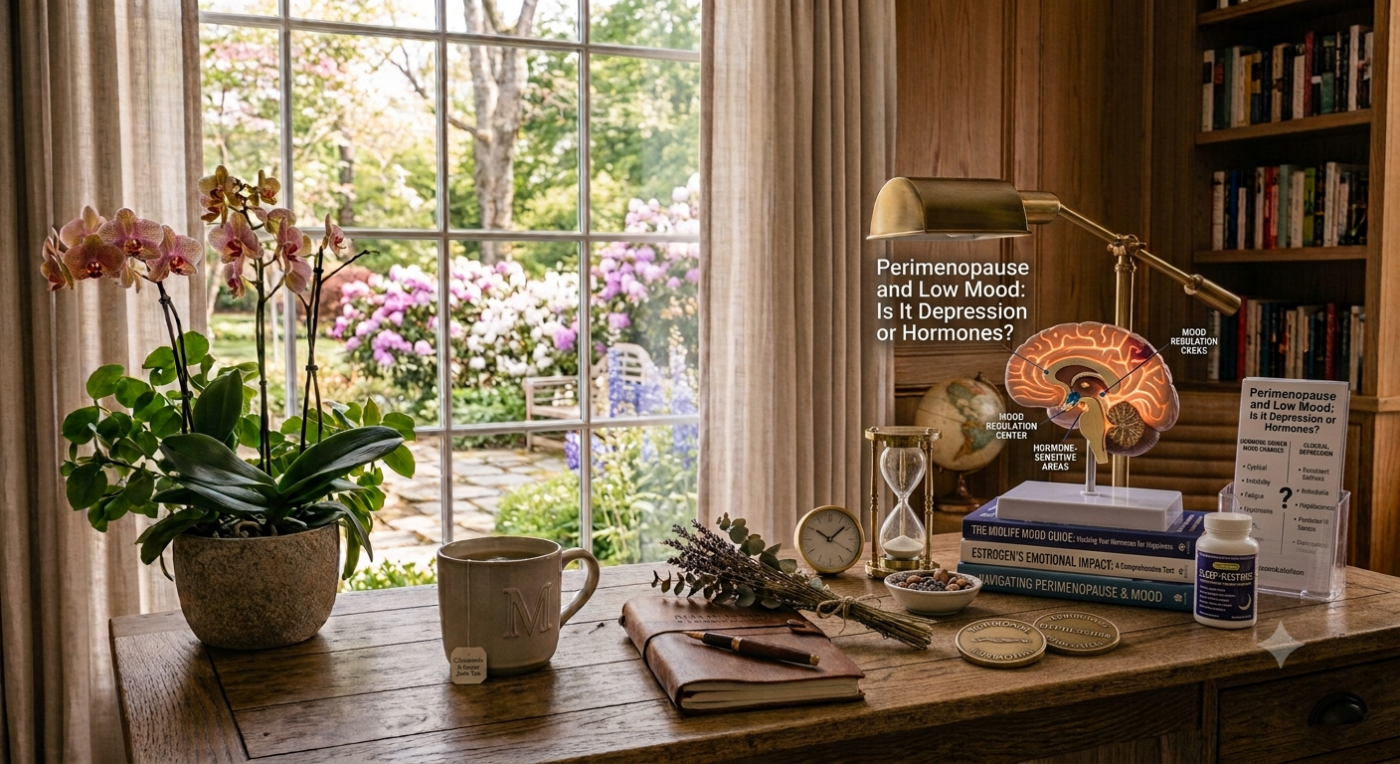
Perimenopause and low mood go together far more often than most women, or their GPs, realise. Research from UCL found that women in the perimenopausal stage are around 40 per cent more likely to experience depressive symptoms than those who are premenopausal.
Why perimenopause causes low mood: the biology
Oestrogen promotes serotonin production and increases receptor density. When oestrogen fluctuates during perimenopause, serotonin activity is disrupted. Progesterone has direct mood-stabilising effects through allopregnanolone acting on GABA receptors. Declining testosterone reduces dopamine activity, contributing to anhedonia and loss of motivation.
Is it depression or is it hormones?
| Pattern | May suggest | Next step |
|---|---|---|
| Started in the forties with cycle changes | Perimenopause-related mood change | Discuss menopause care and HRT suitability |
| Persistent hopelessness or severe impairment | Clinical depression | GP or mental health assessment |
| Self-harm or suicidal thoughts | Urgent risk | Seek urgent help immediately |
| Worse before periods | Hormonal sensitivity | Track symptoms and discuss options |
Hormonally driven low mood typically begins in the forties with other perimenopause symptoms, varies cyclically, and responds to HRT. Clinical depression tends to be more constant, involve greater functional impairment, and may have a previous history.
Why this distinction matters
A BJPsych Bulletin review highlights that new-onset low mood around perimenopause should prompt consideration of hormonal factors and HRT, rather than assuming antidepressants are always the first answer. NICE guidelines are explicit that antidepressants should not be routinely offered as a first-line treatment for low mood in menopausal women without a diagnosed depressive disorder.
Treatment options
For new-onset low mood in the perimenopausal context without a diagnosed depressive disorder, HRT may be an important treatment option to discuss. Micronised progesterone has mood-stabilising properties through GABA activity. Menopause-specific CBT is endorsed by NICE. Antidepressants are appropriate when a clinical diagnosis of depression is made.
IMPORTANT: If low mood is accompanied by thoughts of self-harm or suicide, seek urgent help: contact your GP, call 111, call the Samaritans on 116 123, or attend your nearest accident and emergency department.
If you feel at risk of harming yourself: call 999, go to A&E, call NHS 111, contact your GP urgently, or call Samaritans free on 116 123.
For related support, see menopause counselling, menopause anxiety, and HRT in the UK.
Frequently Asked Questions
Can perimenopause cause depression?
Yes. UCL research found that women in perimenopause are around 40 per cent more likely to experience depressive symptoms, driven by the effect of hormonal fluctuations on serotonin, dopamine, and GABA.
How do I know if my low mood is depression or perimenopause?
Key indicators of hormonal low mood: onset in the forties with other perimenopause symptoms, cyclical variation, feeling not like yourself rather than profound hopelessness. Clinical depression involves more pervasive hopelessness and significant functional impairment.
Should I take antidepressants for perimenopausal low mood?
NICE guidelines are clear that antidepressants should not routinely be the first-line treatment for new-onset low mood in perimenopausal women without a diagnosed depressive disorder. HRT should be discussed as a relevant treatment option before assuming antidepressants are the only route.
Does HRT help with low mood during perimenopause?
For many women with new-onset low mood in the perimenopausal context, it can help. Many women experience significant improvement within weeks to months of starting the right HRT preparation.
What is the difference between perimenopausal low mood and clinical depression?
Perimenopausal low mood is primarily hormonally driven, often cyclical, and may improve with appropriate menopause treatment. Clinical depression involves pervasive hopelessness, significant functional impairment, and symptoms that may not vary cyclically.
Can perimenopause make existing depression worse?
Yes. Women with a history of depression, PMS, PMDD, or anxiety are at higher risk due to greater hormonal sensitivity. Hormonal changes may reduce the effectiveness of previously effective antidepressants.
What should I do if I think my low mood is related to perimenopause?
Book a GP appointment, come prepared with a description of your symptoms and how they vary with your cycle, and ask specifically whether HRT might be appropriate for you.
Is low mood after menopause the same as during perimenopause?
Not always. Mood often improves as hormone levels stabilise after menopause. Persistent postmenopausal low mood may still respond to HRT or may represent clinical depression requiring its own treatment.

Author: The Menopause Directory
About this guide
This guide is published by The Menopause Directory editorial team to help UK readers understand menopause symptoms, support options and services. It is for general information only and should not replace advice from a GP, pharmacist or qualified menopause specialist.
Last reviewed by The Menopause Directory editorial team.