
Published on LiveWellHub.co.uk | Your trusted UK menopause directory
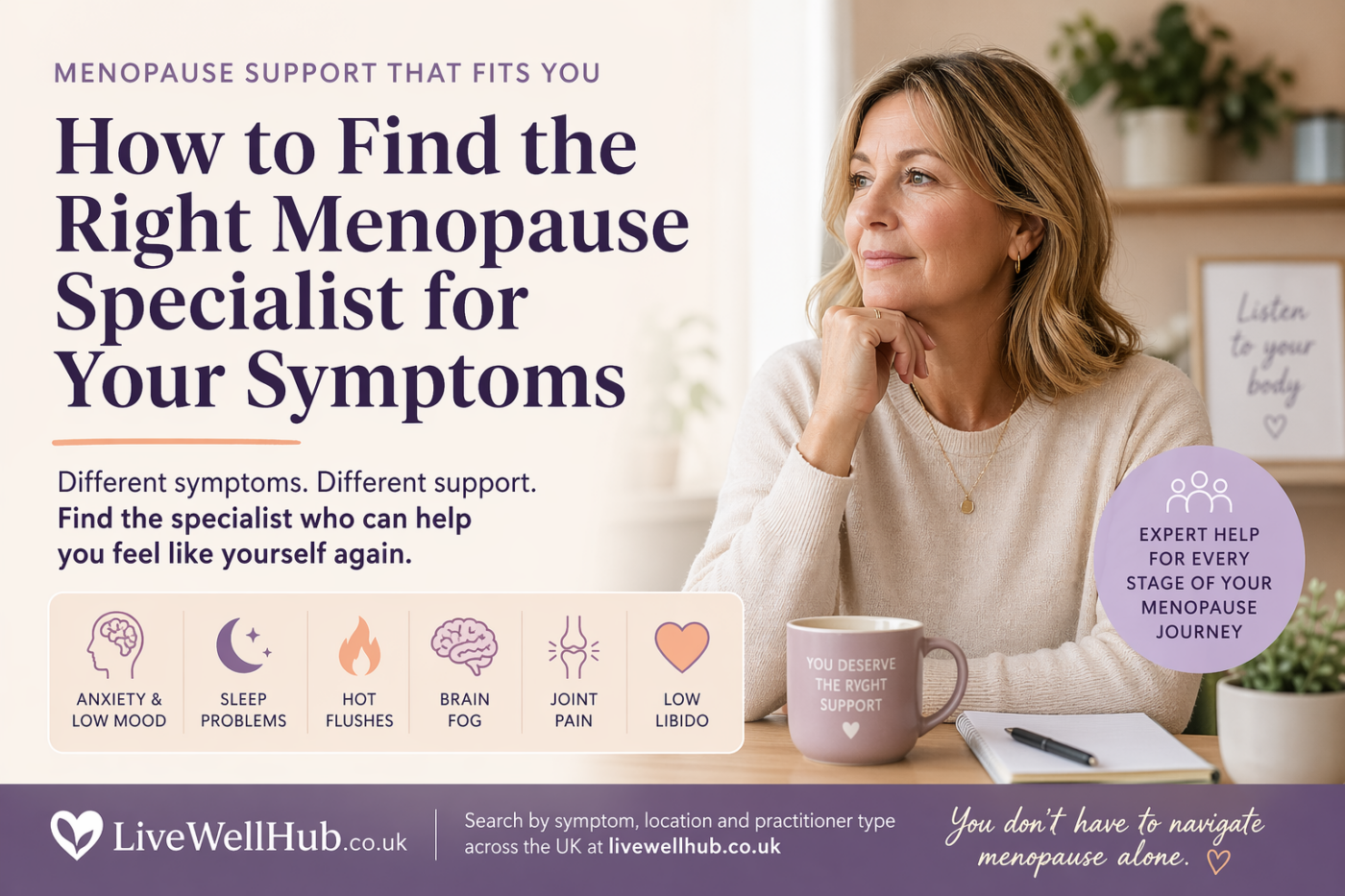
Not all menopause support is the same, and not all symptoms point you to the same kind of specialist. If you are struggling with anxiety, sleep problems, hot flushes, brain fog or joint pain, knowing where to turn first can make it much easier to get the right support. NHS and NICE guidance recognise that menopause can cause a wide range of physical, cognitive and emotional symptoms, and different practitioners may help in different ways depending on what is affecting you most.
This guide breaks down some of the most common menopause symptoms and explains which type of practitioner or service may be best placed to help, whether that is a GP, a menopause specialist, a therapist, a dietitian, a physiotherapist or a specialist nurse.
LiveWellHub tip: Use our directory at livewellhub.co.uk to search by symptom, location and practitioner type across the UK.
Understanding Your Symptoms First
Menopause can affect the whole body. Changes in hormone levels during perimenopause and menopause can contribute to symptoms including hot flushes, sleep disturbance, mood changes, brain fog, joint pain, vaginal dryness, reduced libido and changes in confidence or concentration. Before searching for support, it can help to identify which symptoms are having the biggest impact on your day-to-day life.
The sections below look at common symptom groups and the kinds of support that may be most helpful.
Anxiety and Low Mood
Anxiety and low mood are common during perimenopause and menopause. These symptoms can sometimes be missed or mistaken for something else, especially when they appear alongside stress, poor sleep or changing life circumstances. A 2024 UCL-led review found women in perimenopause were more likely to experience depressive symptoms than women who were premenopausal.
Who can help:
- A GP or menopause-trained doctor can assess whether your symptoms may be linked to hormonal changes and whether HRT or other treatment options may help. NICE recommends considering HRT for menopausal symptoms and advises against routinely offering antidepressants as first-line treatment for low mood linked only to menopause.
- A therapist or counsellor with menopause experience can support emotional wellbeing, identity changes, confidence and relationship challenges.
- A psychologist or mental health specialist may be appropriate if symptoms are severe, persistent or affecting work, relationships or daily functioning.
- Holistic or wellbeing practitioners may offer supportive techniques alongside medical care, but should not replace assessment where symptoms are significant.
Search on LiveWellHub: Therapists and counsellors with menopause awareness, including inclusive and trauma-informed support.
Sleep Problems
Sleep problems are very common during perimenopause and menopause. These can include difficulty falling asleep, waking during the night, early waking and poor-quality sleep. Night sweats can contribute, but hormonal changes, anxiety and other menopause symptoms can also affect sleep. NICE recommends cognitive behavioural therapy as an option for menopausal symptoms such as low mood or anxiety, and menopause-specific CBT may also help with vasomotor symptoms and sleep disturbance.
Who can help:
- A GP or menopause specialist can assess whether HRT may help, particularly if sleep problems are linked to night sweats or other menopause symptoms. NHS guidance says HRT can help with symptoms including sleep problems.
- A CBT practitioner or sleep therapist trained in insomnia support may help with practical, evidence-based sleep strategies.
- A registered dietitian or nutrition professional with menopause knowledge may help identify eating patterns or lifestyle factors affecting sleep.
- A yoga, relaxation or breathwork practitioner may support stress regulation for some women as part of a wider support plan.
Search on LiveWellHub: Sleep support and menopause-aware wellbeing professionals near you.
Hot Flushes
Hot flushes are one of the most recognised menopause symptoms and can range from mildly disruptive to severe. NHS guidance says HRT is the most effective treatment for menopausal symptoms including hot flushes and night sweats. NICE also recommends fezolinetant as an option for moderate to severe vasomotor symptoms when HRT is unsuitable or not tolerated.
Who can help:
- A GP or menopause specialist is usually the best first step. They can discuss HRT, risks, benefits and whether it is suitable for you.
- A menopause specialist clinic may be helpful if symptoms are severe, treatment is complex or there are contraindications to HRT.
- A complementary therapist, such as an acupuncturist, may be something some women explore, but evidence for symptom relief is more limited and should not be presented as equivalent to clinically recommended treatment.
- A dietitian or nutrition professional may help with wider symptom management and general health, though dietary changes alone are not considered a first-line clinical treatment for hot flushes.
NHS note: Always discuss treatment options, including possible benefits and risks, with a qualified clinician.
Brain Fog
Brain fog can include poor concentration, forgetfulness, slower thinking, difficulty finding words and feeling mentally less sharp than usual. NHS guidance lists difficulty concentrating and memory problems among common menopause symptoms.
Who can help:
- A GP or menopause specialist can assess whether your cognitive symptoms are likely to be linked to menopause and whether treatment such as HRT may help.
- A specialist clinician may be appropriate if symptoms are severe, unusual or raising concern about another cause.
- A registered dietitian or nutrition professional may help with practical support around energy balance, blood sugar patterns and general brain health.
- An occupational therapist or coach may help with practical strategies for managing workload, routines and cognitive demands.
If brain fog is new, worsening or accompanied by other concerning symptoms, it is sensible to seek medical assessment rather than assuming menopause is the only cause.
Weight and Metabolism
Many women notice changes in body shape, body composition or how easily they gain weight during midlife. NHS guidance notes that weight gain can happen during menopause, although ageing, activity levels, sleep, stress and muscle loss can all play a role too.
Who can help:
- A GP can check for other factors that may affect energy, weight or metabolism, including thyroid issues, cholesterol and blood sugar changes.
- A registered dietitian can provide tailored nutritional advice. In the UK, dietitians are regulated professionals and can be checked on the HCPC register.
- A qualified movement professional or physiotherapist can support strength, mobility and exercise planning appropriate for midlife.
- A menopause specialist can discuss symptom management more broadly where weight changes sit alongside other menopause symptoms.
Joint Pain
Joint pain, stiffness and aching muscles are commonly reported during menopause. NHS guidance includes joint aches and pains among the symptoms HRT may help relieve. It is still important not to assume all pain is hormone-related, because conditions such as arthritis or thyroid problems can cause similar symptoms.
Who can help:
- A GP can rule out other causes and decide whether further investigation is needed.
- A physiotherapist can support pain management, mobility and strengthening. Physiotherapists in the UK can be checked on the HCPC register.
- A menopause specialist can discuss whether menopause treatment may help as part of your wider symptom picture.
- A suitably qualified movement professional, such as a Pilates or yoga teacher with experience supporting midlife women, may offer gentle movement support alongside medical care.
Low Libido and Intimate Symptoms
Reduced libido, vaginal dryness, discomfort during sex and bladder symptoms are all common in menopause, but many women do not feel comfortable raising them. NICE recommends vaginal oestrogen for genitourinary symptoms of menopause and recommends considering testosterone supplementation for low sexual desire if HRT alone is not effective. NHS also notes that testosterone is not licensed for women in the UK but may be prescribed by a specialist if appropriate.
Who can help:
- A GP or menopause specialist can discuss vaginal oestrogen, HRT and whether referral or specialist prescribing may be appropriate.
- A pelvic health physiotherapist can help with bladder symptoms, pelvic discomfort and sexual pain.
- A sex therapist or relationship counsellor can support the emotional and relational side of sexual wellbeing.
Search on LiveWellHub: Pelvic health physiotherapists and relationship therapists with menopause awareness.
Workplace Struggles
For many women, menopause symptoms affect confidence, concentration, attendance and performance at work. CIPD research published in 2025 found that around 17% of women aged 40 to 60 had considered leaving work due to a lack of support related to menopause symptoms, and 6% had left.
Who can help:
- A GP or menopause specialist can help ensure symptoms are being properly assessed and managed.
- A menopause coach or workplace wellbeing professional may help with practical strategies and confidence around workplace conversations.
- An occupational therapist may help with strategies, adjustments and functional support.
- Employers, HR teams and line managers may benefit from menopause training delivered by qualified workplace specialists.
How to Find a Qualified Menopause Specialist
When looking for support, it is important to check qualifications, experience and registration.
For allied health professionals:
- Dietitians, physiotherapists, occupational therapists and practitioner psychologists can be checked on the HCPC register.
- Dietitians may also be listed through the British Dietetic Association.
- Counsellors and psychotherapists may be listed with professional bodies such as BACP or UKCP.
It can also help to ask whether a practitioner has experience supporting women in perimenopause or menopause specifically, rather than assuming all practitioners will have that expertise.
Use LiveWellHub to Find Support Near You
LiveWellHub is a UK directory of menopause and women’s wellness practitioners. You can search by location, symptom area, practitioner type and inclusion filters such as LGBTQ+ inclusive, trauma-informed care and neurodivergent-friendly support.
Find your match: Visit livewellhub.co.uk to search the directory and find the right specialist for your symptoms.
Are you a menopause specialist? If you are not yet listed on LiveWellHub, you can add your business for free today and help more women across the UK find the support they need.
Disclaimer
This article is for informational purposes only and does not constitute medical advice. Always seek advice from a qualified healthcare professional for assessment, diagnosis and treatment decisions.