
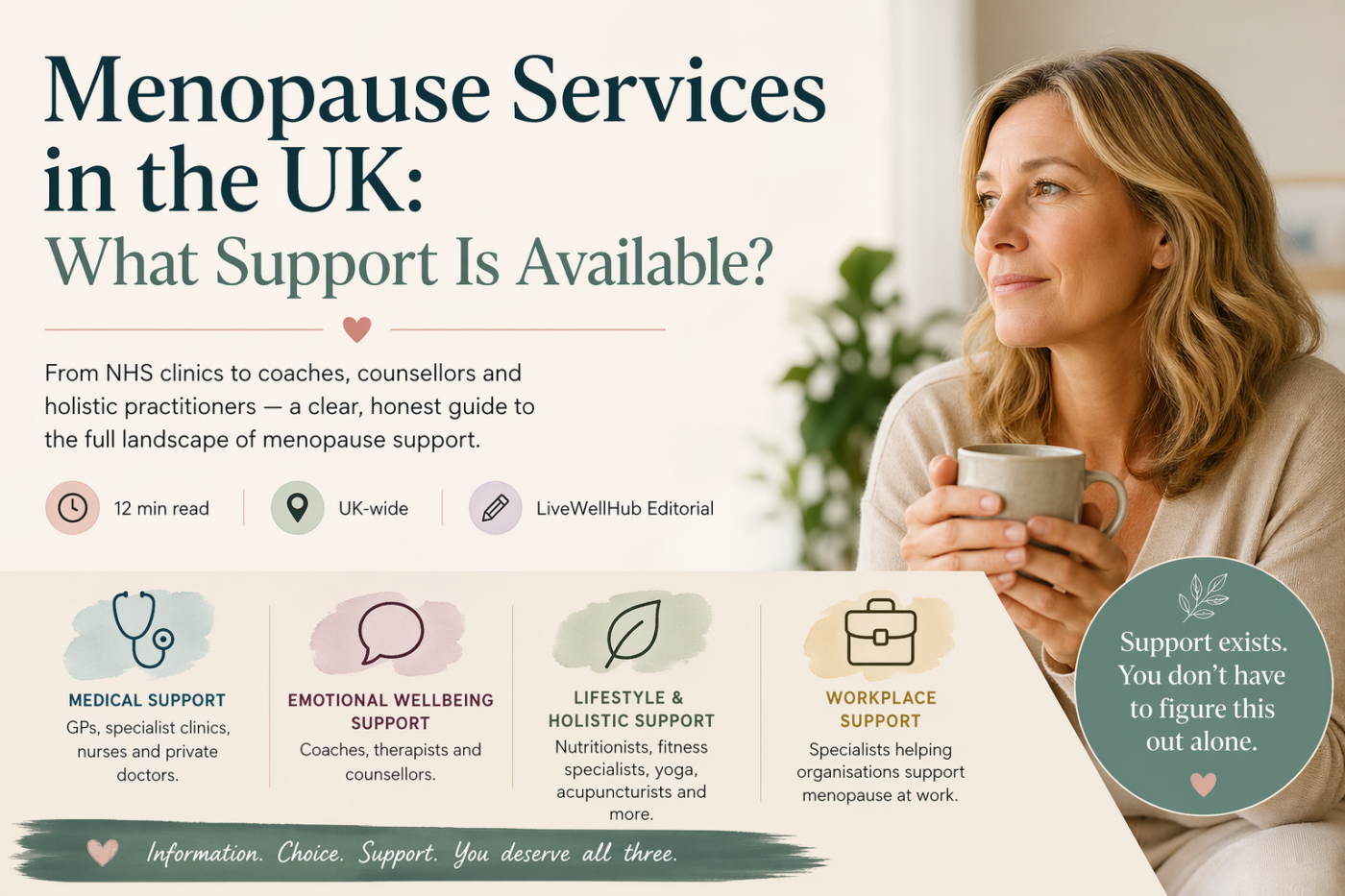
From NHS clinics to coaches, counsellors and holistic practitioners – a clear, honest guide to the full landscape of menopause support.
🕒 12 min read📍 UK-wide
You know something needs to change. Perhaps you’re waking at 3am, feeling unlike yourself, struggling to concentrate at work, or simply searching the words “menopause help near me” without knowing what you’re actually looking for. You’re not alone – and the fact that UK support is more varied than ever is genuinely good news, even if it does make choosing harder.
Why Menopause Support Can Feel So Confusing
Many women begin searching for menopause help and quickly feel overwhelmed. Should you go to your GP? Book a private appointment? Try a coach? See a therapist? Start yoga? The options are real, but without a map of the landscape, it is hard to know where to begin.
The UK menopause support landscape has expanded significantly in recent years. Where once the only conversation was HRT or no HRT, women today can access a broad spectrum of professional help – medical, emotional, nutritional, physical and holistic. Workplace menopause support has also emerged as its own dedicated field.
This guide is designed to give you that map. It is not intended to tell you what to do, but to explain clearly what exists, so that you can make an informed choice that suits your symptoms, your circumstances and your preferences.
The Menopause Directory is a UK directory connecting women to menopause support professionals across all these categories. Throughout this guide, you’ll find pointers to how the platform can help you take your next step.
What Does “Menopause Services” Actually Mean?
The phrase “menopause services” covers a wide range of professional support. At its broadest, it refers to any qualified or trained practitioner who works with women experiencing perimenopause, menopause or post-menopause.
It helps to think of support in four broad categories:
Medical Support
GPs, specialist menopause clinics, nurses and private doctors who can assess, diagnose and prescribe.
Emotional Wellbeing Support
Coaches, therapists and counsellors who help with the psychological and identity aspects of menopause.
Lifestyle & Holistic Support
Nutritionists, personal trainers, yoga teachers, acupuncturists and other wellbeing practitioners.
Workplace Support
Specialists who help organisations create menopause-aware workplaces, policies and cultures.
Most women find that more than one type of support is helpful – and that the combination evolves over time. There is no single right answer.
Menopause Clinics and Medical Professionals
Medical support is often the first port of call, particularly for women with significant physical symptoms such as hot flushes, sleep disruption, joint pain, brain fog, or changes to periods. It is also the appropriate starting point if you are considering Hormone Replacement Therapy (HRT) or other prescribed treatments.
Your GP
Your GP is the natural first step within the NHS. They can assess symptoms, discuss HRT options (including different types, doses and methods of delivery), and refer you onwards if needed. GP knowledge and confidence around menopause does vary, so it is worth asking to see a GP in your practice with a particular interest in women’s health or menopause if one is available.
Specialist NHS Menopause Clinics
Dedicated NHS menopause clinics are available in some parts of the UK, staffed by consultants with specialist training. Referrals are typically made by a GP. Waiting times can vary by service and area, so some women also explore private options.
Private Menopause Doctors and Clinics
Private menopause specialists – including gynaecologists, GPs with a specialist interest, and doctors who are BMS-recognised menopause specialists – offer consultations without NHS waiting times. Fees range but typically sit between £150 and £350 for an initial appointment. Many now offer video consultations, making geography less of a barrier.
Menopause Nurses
Some GP practices, specialist clinics and private providers employ specialist menopause nurses who can offer informed, time-rich consultations and ongoing support. Their knowledge of menopause is often excellent.
When might medical input be most important? If you are experiencing significant physical symptoms, are under 45 and suspect early perimenopause, have complex medical history, or want to discuss HRT, starting with a medical professional is advisable. For most women over 45, perimenopause and menopause are diagnosed clinically – from symptoms and menstrual history – rather than by blood test, so you do not need to wait for a “confirmed” result before seeking support.
Find the right clinical services at The Menopause Directory
Menopause Coaching
Menopause coaching has grown rapidly as a professional field, and for good reason. While medical appointments are often limited in time and focused on symptoms and treatment, coaching takes a broader view – addressing how a woman is experiencing menopause across her whole life.
What Do Menopause Coaches Do?
A menopause coach helps you to understand your experience, identify what is driving your challenges, clarify what you want, and take intentional steps forward. Coaches may work with you on:
- Making sense of your symptoms and their lifestyle triggers
- Building confidence and a sense of identity through change
- Sleep, stress, energy and daily routine
- Relationships, communication and boundaries
- Career, purpose and “what’s next” in midlife
- Navigating medical appointments with clarity and confidence
Importantly, coaches do not diagnose conditions or prescribe treatments. They work alongside (not instead of) medical support.
Who May Benefit Most From Coaching?
Coaching tends to suit women who feel they have a reasonable handle on their physical symptoms but are struggling more with the emotional, motivational or life-direction aspects of this transition. It also works well for women who are proactive by nature and prefer a goal-oriented, forward-looking approach to support.
Perimenopause can shake a woman’s sense of who she is. Coaching creates space to rebuild – not back to who she was, but forward to who she wants to become.
Find a Menopause Coach who can help you at The Menopause Directory
Counselling and Therapy
The emotional impact of perimenopause and menopause is frequently underestimated – by healthcare systems, by workplaces, and often by women themselves. Hormonal changes can affect mood, sleep and emotional wellbeing in ways that are real and significant. When these changes layer onto existing life stressors – caring responsibilities, career pressures, relationship changes – the cumulative weight can become significant.
How Therapists and Counsellors Can Help
Therapists and counsellors offer a structured, confidential space to process what is happening emotionally. They may work with:
- Anxiety and low mood linked to hormonal fluctuation
- Grief, loss and identity changes – including loss of fertility
- Changes in confidence, self-worth and body image
- Relationship strain and communication difficulties
- Burnout, overwhelm and feeling unable to cope
- Historical trauma or mental health conditions that menopause may be amplifying
Approaches vary between practitioners and may include Cognitive Behavioural Therapy (CBT) – which has a strong evidence base for menopause-related anxiety and mood – as well as person-centred counselling, EMDR, mindfulness-based therapies and others. Some therapists specialise specifically in midlife women and menopause.
Therapy or coaching? Counselling and therapy tend to focus on processing past and present experience, particularly emotional difficulty. Coaching is typically more future-focused and goal-oriented. Some practitioners hold both qualifications. If you are unsure, discussing this with a potential practitioner before committing is entirely reasonable.
Find a counsellor who understands menopause at The Menopause Directory
Nutrition Support
What we eat has a measurable influence on how we experience menopause, and yet nutrition is one of the least-discussed aspects of menopause support. A registered nutritionist or dietitian with experience in women’s health can offer genuinely useful, evidence-informed guidance.
How Nutritional Support May Help
A nutritionist or dietitian may work with you on:
- Supporting bone density through diet (calcium, vitamin D, magnesium)
- Managing changes in weight, particularly around the abdomen
- Reducing hot flush frequency and severity through specific foods and avoiding triggers
- Supporting gut health, which interacts with hormonal balance
- Improving sleep and energy through dietary adjustments
- Blood sugar balance to reduce mood swings and brain fog
It is worth distinguishing between registered dietitians (who hold a statutorily regulated qualification – dietitian is a protected title in the UK, regulated by the HCPC) and nutritionists (a less regulated title – look for registration with the Association for Nutrition, which operates a voluntary register). Both can offer valuable support; the key is checking the registration and experience of any practitioner you consider.
Find a nutritionist or dietitian who understands menopause.
Fitness and Movement Support
Exercise is strongly recommended during perimenopause and menopause for its benefits to bone density, cardiovascular health, mood, sleep, strength and weight management. It may also help with some symptoms such as hot flushes, though individual responses vary. The type of exercise that works best during this transition is somewhat different to what many women have done before, and it is worth getting informed guidance.
The Role of Exercise Specialists
Personal trainers, fitness coaches and movement specialists who understand the menopause transition can be particularly helpful. They can tailor programmes that account for hormonal fluctuations, recovery needs, and the specific physiological shifts of midlife – including muscle loss (sarcopenia), joint changes, and the increased importance of strength training for bone density.
Types of Movement Support Available
- Strength training: Increasingly recognised as essential, not optional, in menopause – supporting bone density, muscle mass and metabolic health
- Yoga and pilates: Support flexibility, core strength, stress reduction and body awareness
- Walking and low-impact cardio: Accessible and effective for mood and cardiovascular health
- Specialist menopause fitness programmes: An emerging area, with coaches and classes designed specifically for women in perimenopause and beyond
Holistic and Complementary Support
Many women explore holistic and complementary therapies alongside – or instead of – conventional approaches. These are a matter of personal preference and individual response, and the evidence base varies widely between therapies. The Menopause Directory lists holistic practitioners so that women can find and evaluate options for themselves.
Complementary therapies that women may explore include:
- Acupuncture: Used by some women, but the evidence for symptom relief is mixed
- Massage therapy: Supports relaxation, reduces tension and may ease musculoskeletal symptoms
- Breathwork: Can be effective for managing hot flushes, anxiety and nervous system regulation
- Mindfulness-based approaches: A well-evidenced area for stress, anxiety and quality of life
- Reflexology, aromatherapy and other holistic therapies: Individually chosen; some women find them helpful as part of a broader self-care routine
We present these options without advocacy for any specific approach. What matters is that you have access to clear information about what exists, so that you can make choices that feel right for you.
Workplace Menopause Support
Menopause affects women during what are often peak career years. Research consistently shows that a significant number of women reduce their hours, pass up promotions, or leave employment altogether because of inadequately supported menopause symptoms. This represents a substantial cost – to women, to organisations and to society.
Workplace menopause support has grown into a specialist professional field, and there is now a range of services available to employers who want to do better.
What Workplace Menopause Support Looks Like
- Menopause awareness training: For managers, HR teams and wider workforce
- Menopause policy development: Creating or reviewing workplace menopause policies
- Consultancy: Advising on organisational culture and inclusion
- Coaching for individuals: Supporting employees experiencing menopause in the workplace
- Menopause champion programmes: Building internal networks of informed advocates
- Reasonable adjustments guidance: Helping managers and HR respond appropriately
The Menopause Directory lists practitioners who offer workplace menopause services, making it easier for HR professionals, business owners and line managers to find qualified support.
How to Choose the Right Type of Menopause Support
With this range of options available, how do you work out where to start? There are three useful lenses:
| If you’re primarily guided by… | Consider starting with… |
|---|---|
| Physical symptoms (hot flushes, sleep, joint pain, changes to periods) | GP or private menopause doctor / specialist clinic |
| Emotional symptoms (anxiety, low mood, loss of confidence, overwhelm) | Therapist / counsellor, or menopause coach |
| Lifestyle and body (weight, energy, fitness, nutrition) | Nutritionist or specialist fitness professional |
| Whole-life or identity shift (what’s next, purpose, relationships) | Menopause coach |
| Workplace difficulties (performance, adjustments, HR questions) | Workplace menopause specialist or coach |
| Preference for holistic approaches | Explore holistic practitioners and complementary therapies |
Practical Factors to Consider
Alongside the nature of your symptoms and preferences, practical considerations matter:
- Budget: NHS services are free at point of use; private and independent practitioners vary widely in cost. Many offer initial consultations at a reduced rate.
- Online vs in-person: A significant proportion of menopause practitioners now work online, giving access to specialists outside your immediate area
- Location: If in-person matters to you, location filtering is key – which is why The Menopause Directory allows you to search by area
- Approach and fit: The relationship with a practitioner matters. Most offer a discovery call or initial consultation; use this to assess whether their approach feels right for you
How The Menopause Directory Can Help
The Menopause Directory exists to make this landscape navigable. We are a directory of UK-based menopause support professionals, organised so that you can find the right type of help for your specific situation – without needing to know in advance exactly what you’re looking for.
You can browse by category – medical, coaching, therapy, nutrition, fitness, holistic, or workplace – and filter by location or online availability. The directory focuses on UK practitioners who support women through perimenopause and menopause.
Whether you know exactly what you need or you’re still working it out, we invite you to explore the directory and take the next step at your own pace.
Ready to Find the Right Support?
Browse UK menopause professionals by category and location. Find someone who fits your needs, your preferences, and your life. Browse Menopause Support on The Menopause Directory.
You Do Not Have to Work This Out Alone
The most important thing to know is this: support exists. Whatever you are experiencing, however confusing or isolating it feels, there are qualified, experienced professionals in the UK who work specifically with women going through exactly what you are going through.
You do not need to have the right vocabulary. You do not need to have already decided what kind of support you want. You do not need to minimise what you’re experiencing or push through without help. Reaching out – whether to your GP, a menopause coach, a therapist, or through a directory like The Menopause Directory is a completely reasonable, sensible and self-respecting thing to do.
The menopause transition can be genuinely challenging. It can also be the beginning of a new chapter approached with far more knowledge, support and intention than previous generations had access to. Use the resources that exist. You deserve them.
Find Support Near You
Browse UK menopause professionals by type and location on The Menopause Directory.
Related menopause guides
- How to Find a Menopause Specialist Near You in the UK
- How to Get Referred to an NHS Menopause Clinic in the UK
- Private Menopause Clinics in the UK: Costs, Specialists and What to Expect
- Browse menopause services in The Menopause Directory

Author: The Menopause Directory
About this guide
This guide is published by The Menopause Directory editorial team to help UK readers understand menopause symptoms, support options and services. It is for general information only and should not replace advice from a GP, pharmacist or qualified menopause specialist.
Last reviewed by The Menopause Directory editorial team.