

Greasy hair in perimenopause: quick answer
Greasy or oilier hair can happen for lots of reasons. Some people notice scalp and hair changes around perimenopause, but oily roots can also be linked to hair products, stress, sweating, skin conditions, diet changes, medicines or other health factors.
If the change is sudden, severe, comes with hair loss, scalp irritation, acne, irregular bleeding, or other symptoms that worry you, speak with your GP, pharmacist or a qualified clinician.
If your hair has started feeling oilier, flatter, or greasier faster than usual, sometimes even just a day after washing, you’re definitely not imagining it.
Some people going through perimenopause notice changes in their hair texture, oiliness or growth, although greasy hair can have several causes.
It can be frustrating, especially if your hair routine has worked perfectly for years. One minute it’s fine, the next your scalp feels oily, your roots look limp, and your ends are dry.
So, what’s going on, and what can you actually do about it?
Let’s look at why greasy hair can sometimes change around perimenopause, what else to consider and what may help.
1. What’s Really Going On: Hormones and Oil Production
Perimenopause is the time when hormone levels start to fluctuate. Oestrogen and progesterone, which normally help keep your hair follicles healthy and your scalp balanced, begin to rise and fall unpredictably.
As these hormones drop, androgens, the so-called “male” hormones that women also produce, can become more dominant. Androgens are directly linked to oil production because they tell your scalp’s sebaceous glands to make more sebum.
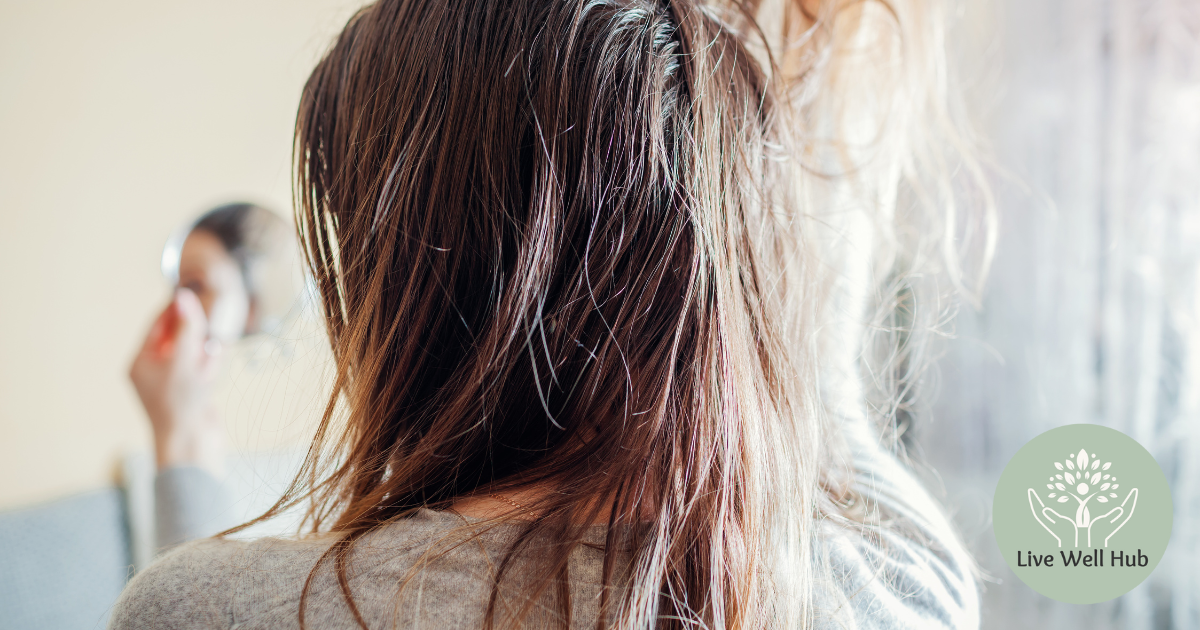
The result is more oil sitting on your scalp, leaving your roots greasy while the rest of your hair feels dull or dry.
At the same time, oestrogen helps keep hair thick and strong. When levels fluctuate, your hair thins, each hair shaft becomes finer, and there’s less hair to absorb that extra oil. That’s why so many women notice greasier hair during perimenopause, even if their hair used to be on the dry side.
How This Feels Day to Day
You might notice:
- Roots that look oily or slick the day after washing your hair
- Hair that feels limp and lifeless, even when freshly washed
- Ends that still feel dry or brittle
- A general change in hair texture, softer or finer than before
- The occasional hair loss or more shedding than you’re used to
These changes are all connected to those unpredictable hormone levels and the effect they have on your hair follicles and scalp.
2. Why Perimenopause Often Leads to Greasier Hair
Your scalp is very sensitive to hormonal changes. When your body produces too much sebum, or natural oil, it can collect near the scalp rather than evenly coating your strands.
Because hair thins during perimenopause, there’s less hair to distribute that oil, which means your roots get greasy faster and your style loses volume or bounce.
Some women also experience an itchy or uncomfortable scalp during this time. That’s because the excess oil can trap dirt and residue around the hair follicles, making the scalp feel congested.
This all creates a frustrating cycle. You wash your hair more often to get rid of the oil, but frequent washing can actually make your scalp produce even more oil.
3. Common Mistakes That Make It Worse
When your hair suddenly feels greasy, it’s natural to reach for stronger shampoos or start washing daily. But those quick fixes can backfire.
Here are a few habits that can make greasy hair during perimenopause worse.
Over-washing
Washing too often strips your scalp of its natural oils, triggering it to overcompensate by making even more.
Using harsh shampoos
Products with strong sulphates or alcohols can irritate your scalp, upsetting your natural oil production balance.
Conditioner overload
Applying conditioner near your scalp can weigh your hair down and make it look greasy faster. Always apply it from the mid-lengths to the ends of your hair shaft.
Not drinking enough water
Dehydration can cause your scalp to overproduce oil. Always remember to stay hydrated. It really does make a difference.
Diet and stress
Refined sugars, processed foods, and chronic stress all influence hormone levels, and that can show up on your scalp too.
Product build-up
Dry shampoo, hairspray, and serums can leave residue that traps oil and clogs your hair follicles.
4. How to Fix Greasy Hair During Perimenopause
Don’t worry, this is completely manageable. The key is to help your scalp rebalance naturally without stripping it or overloading it.
Here’s how.
Step 1: Switch to a Gentle, Sulphate-Free Shampoo
Look for a shampoo that’s designed for sensitive or mature scalps. Sulphate-free formulas cleanse without over-drying. Try UK brands like Faith in Nature, Odylique, or Noughty Haircare.
- Focus the shampoo on your scalp, not your ends
- Massage gently to boost circulation and clear residue
- Use lukewarm water instead of hot water
- Use a clarifying shampoo once a week to lift any build-up
Step 2: Rethink How Often You Wash
If you’re washing every day, try stretching it out gradually to every other day. It might feel greasy for a week or two, but your scalp will start to calm down once it realises it doesn’t need to overproduce oil.
If you really need a refresh between washes, use a natural dry shampoo made with rice or oat powder. Avoid heavy, talc-based ones that clog follicles.
Step 3: Condition Smartly
Conditioner is still important, especially as hair thins during perimenopause, but less is more.
- Apply only from mid-lengths to ends
- Avoid your roots completely
- Choose lightweight, silicone-free formulas that won’t coat your hair
A light spray conditioner or detangler can help keep your ends soft without adding weight.
Step 4: Care for Your Scalp
Think of your scalp like the skin on your face. It needs attention too.
- Exfoliate once a week with a gentle scalp scrub or detox treatment
- Clean your brushes regularly and change your pillowcases often
- Massage your scalp for a few minutes each day to spread natural oils evenly and stimulate hair growth
These little rituals can make a big difference to your overall hair health.
Step 5: Support Your Hair From the Inside Out
During perimenopause, your body needs more nutritional support for healthy hair growth.
- Eat plenty of protein, iron, and zinc
- Include foods rich in omega-3 fatty acids like salmon, chia seeds, and walnuts
- Keep drinking water to stay hydrated, as dehydration directly affects your scalp’s oil production
- Try adding biotin, vitamin D, or collagen supplements after checking with your GP
Step 6: Manage Stress and Sleep
Stress affects everything, including your hormone levels and oil production.
Make time for calm moments such as short walks, gentle yoga, or journalling.
Good-quality sleep helps your hormones and scalp function more smoothly, supporting healthy hair and balanced oil.
5. When to Get Professional Advice
If your scalp oiliness feels extreme, or if you’re noticing sudden hair loss or irritation, it’s worth checking in with your GP or a trichologist.
They can assess your hormone levels, thyroid function, and scalp health to make sure nothing else is contributing.
Sometimes even simple topical treatments or mild scalp tonics can make a big difference.
6. Final Thoughts: Your Hair Is Just Adjusting
Greasy hair during perimenopause can be annoying, and for many people it can improve with gentler hair care and a clearer routine.
Your scalp may be responding to changing hormones, products, stress or other factors, so pay attention to the pattern and get advice if you are worried.
Be gentle with yourself and your hair. Focus on balance rather than perfection, drink water, nourish your body, and give your scalp a bit of care and patience.
Your hair texture might not be exactly what it used to be, but it can still look shiny, clean, and healthy in a way that suits where you are now.
Small changes can make this feel more manageable, and you do not have to work it out alone.